


Parampara Naturals
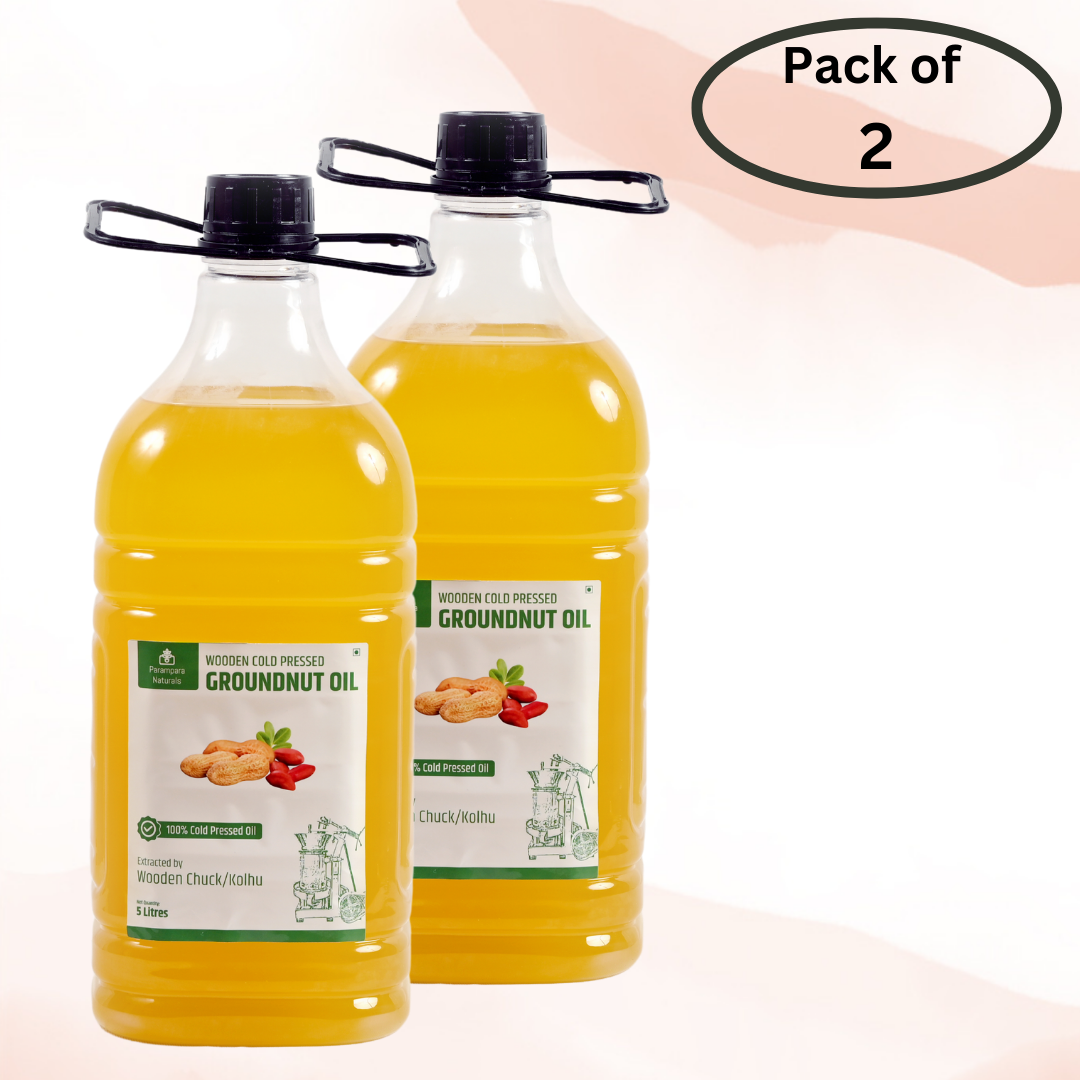
Cold Pressed Groundnut Oil
Cold Pressed Groundnut Oil
Couldn't load pickup availability
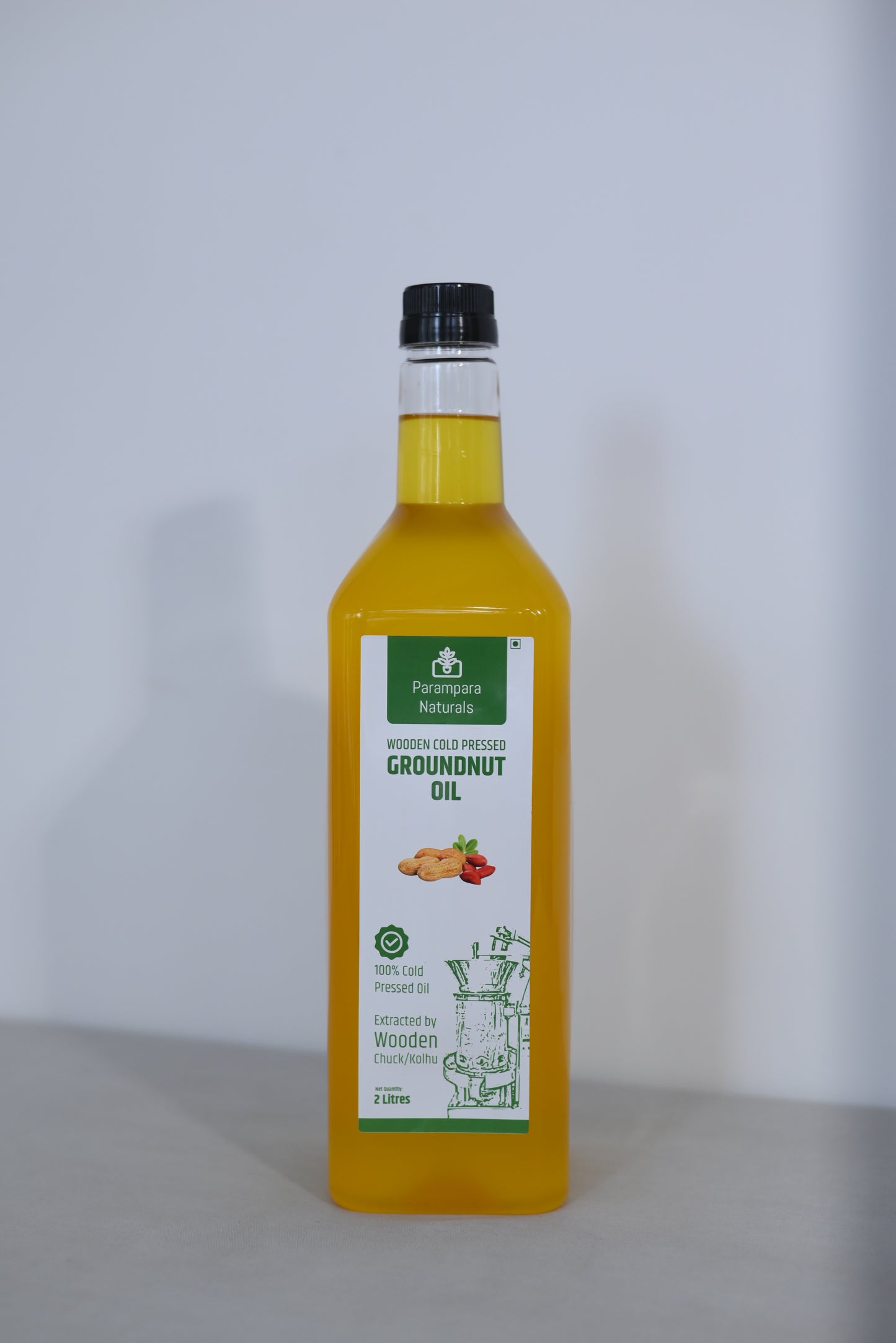
Cold Pressed Groundnut Oil — Wood Pressed, Straight from Our Nagpur Mill
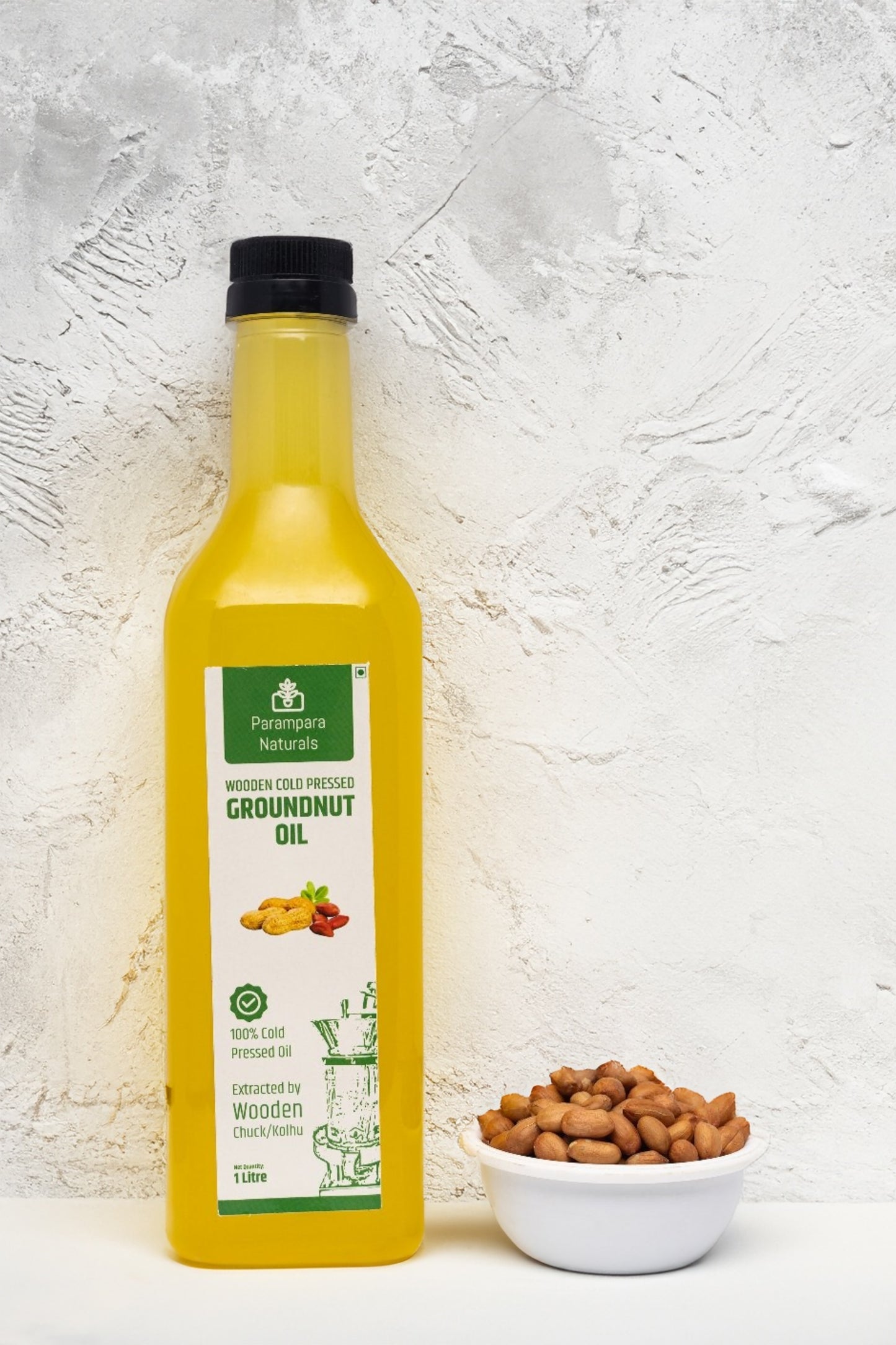
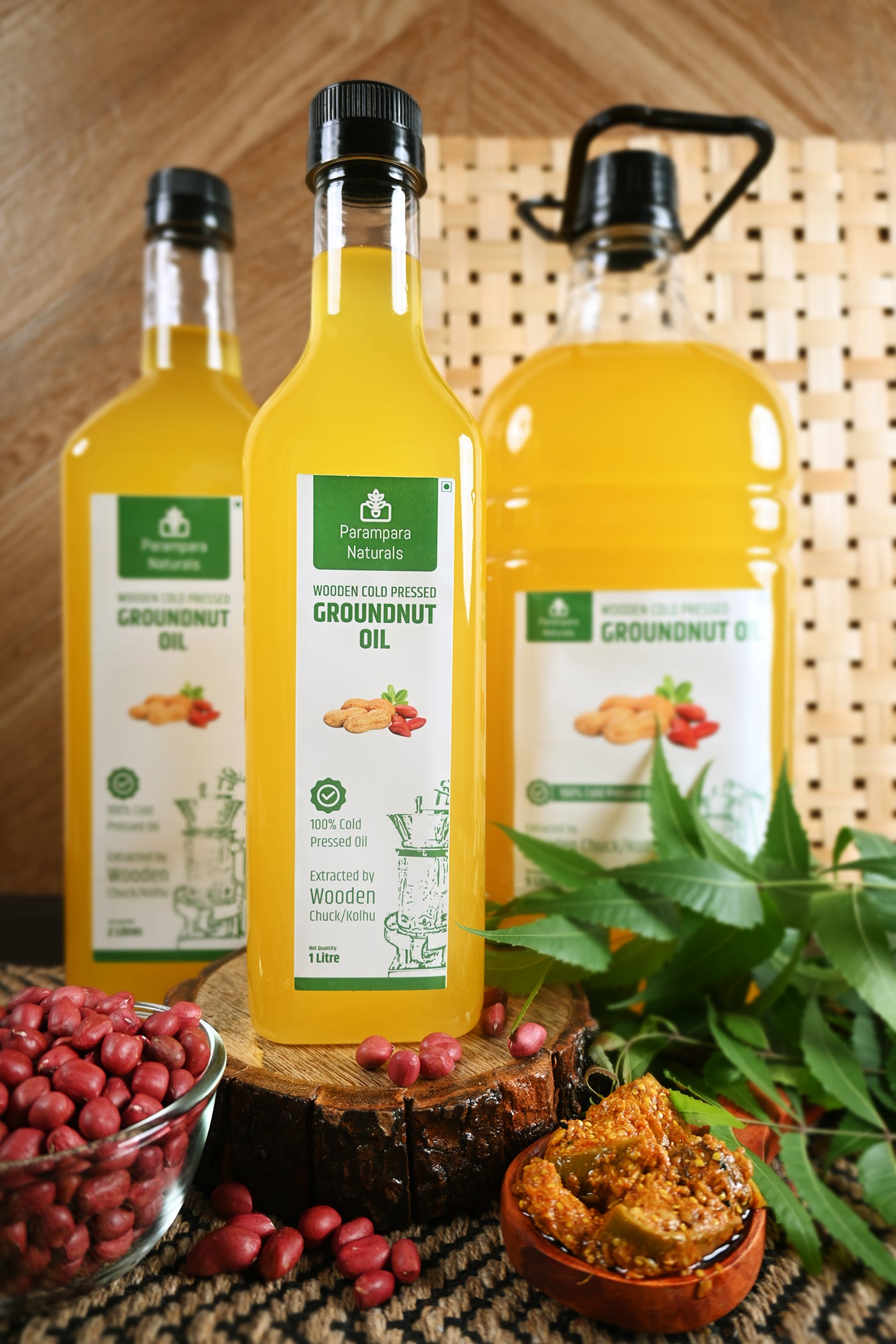
Groundnut oil is the everyday oil in most Indian kitchens, and it's usually the first place refining quietly creeps in. Ours doesn't go through any of that. We press it the way groundnut oil was pressed for generations — in a wooden kolhu (ghani), at low speed and low temperature — then simply filter and bottle it. No hexane, no bleaching, no deodorising, no chemical solvents.
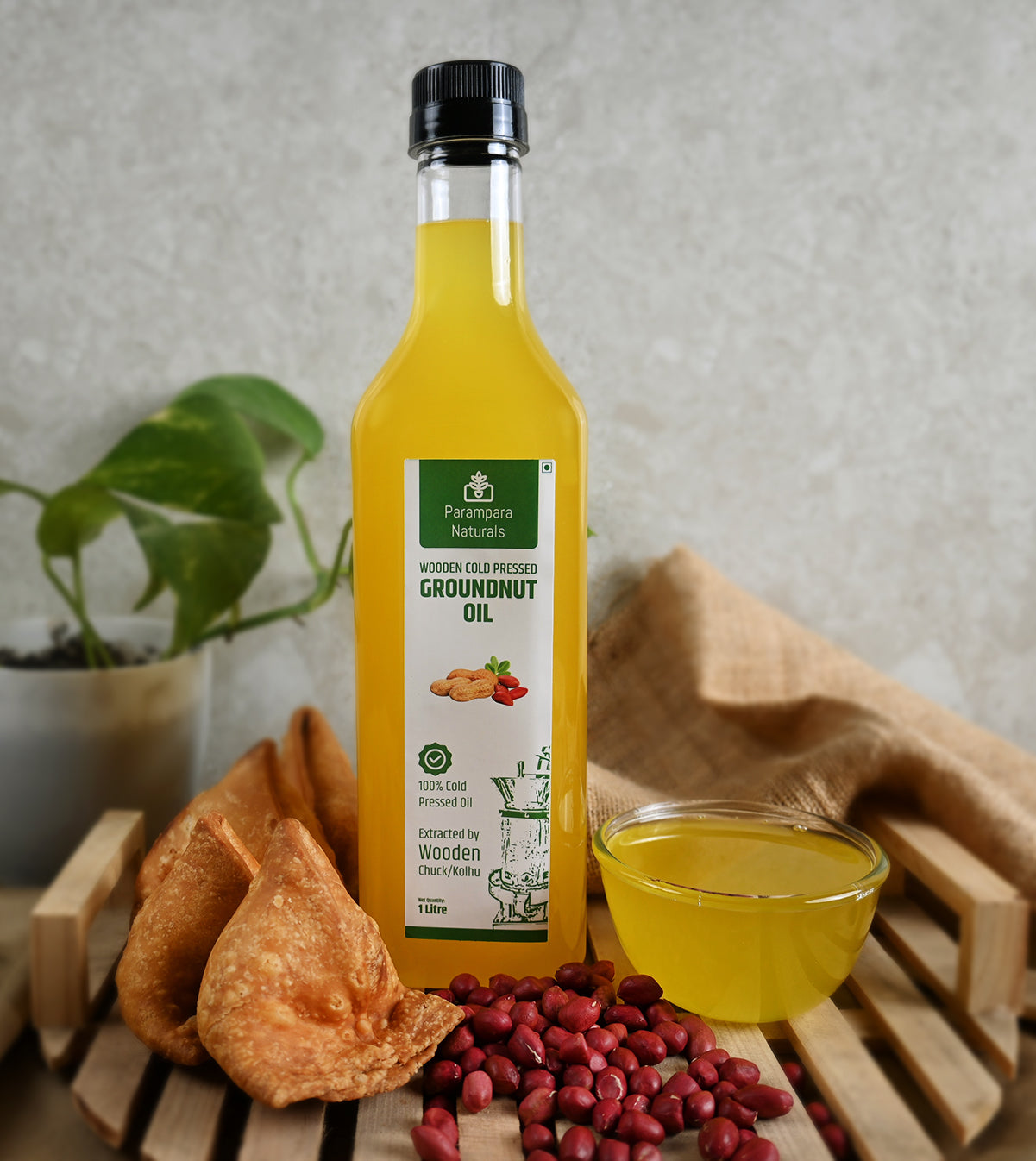
That process is also why our oil looks, smells and tastes different from the refined groundnut oil you're used to. It has a faint golden colour and a mild, nutty aroma — because we haven't stripped those things out. If you've only ever cooked with refined oil, the first few uses can feel like a genuine "oh, that's what oil is supposed to taste like" moment.
How we press it. Raw groundnuts are cleaned and fed into a wooden ghani — a slow-turning mechanical press that crushes the seed and extracts the oil through pressure and friction, not heat or solvents. Because the ghani runs slow, the oil never crosses the temperature at which heat starts degrading nutrients and flavour compounds. What comes out is filtered to remove sediment and bottled — nothing added, nothing taken away beyond that.
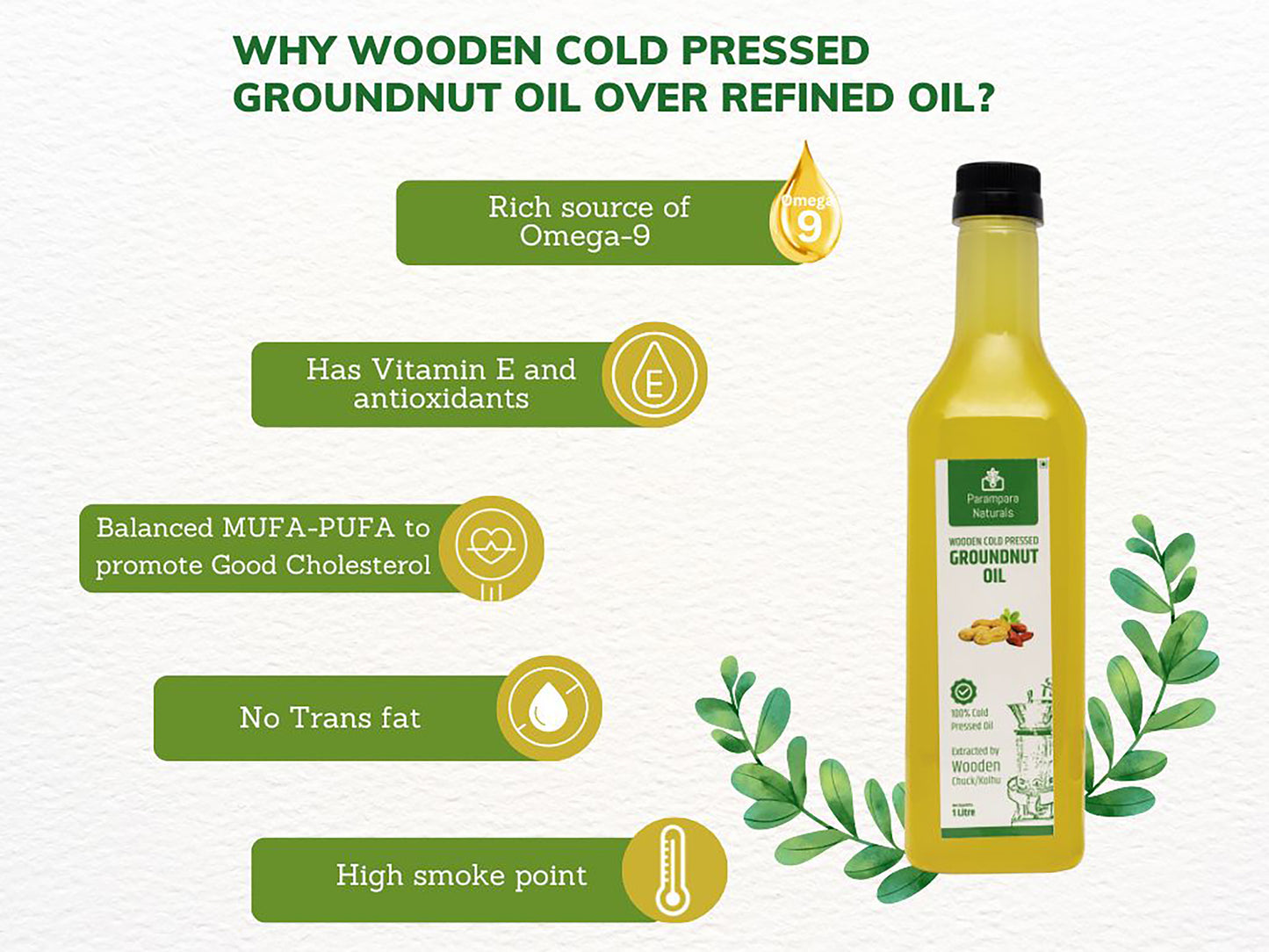
Why that matters. Refining a seed oil typically means degumming, neutralising, bleaching and deodorising it — each step designed to strip colour, smell and "impurities" so the oil looks and tastes the same in every bottle. That consistency comes at a cost: many of the natural antioxidants, phytosterols and trace nutrients that came from the groundnut go with it. Cold pressing skips all of that. You get an oil closer to what the seed actually contained, at the cost of a shorter shelf life and a little batch-to-batch variation — which, if you ask us, is a fair trade.
Groundnut oil itself is naturally rich in monounsaturated fats (the same broad family found in olive oil) and carries natural vitamin E from the seed. It has a reasonably high smoke point among cold-pressed oils, which is part of why it's the most versatile all-rounder oil in North and West Indian cooking — everyday sautéing, deep frying, and tempering all work well with it.
How to use it
| Use | Notes |
|---|---|
| Everyday cooking (sabzi, dal tadka) | Our default recommendation — mild flavour won't overpower the dish |
| Deep frying | Reasonably high smoke point for a cold-pressed oil; don't reuse the oil more than once or twice |
| Tempering (tadka) | Heats evenly, carries spice aroma well |
| Salad dressings, raw drizzle | Works, though the flavour is milder than sesame or mustard |
| Baking | Neutral enough for most Indian baked snacks |
Storing it right
Keep the bottle tightly capped, away from direct sunlight and heat — a kitchen cabinet or pantry shelf is ideal, not next to the stove. Cold-pressed oil doesn't contain the preservative-like stability that heavy refining gives, so use it within 4–6 months of opening for the best flavour. Refrigeration isn't necessary; if the oil turns cloudy in cold weather, that's just natural fats solidifying — it clears again at room temperature and is safe to use.
Frequently asked questions
Is cold pressed groundnut oil good for daily cooking?
Yes — it's the most commonly used cold-pressed oil in Indian kitchens for exactly this reason. Its mild, nutty flavour and reasonably high smoke point make it suitable for daily sabzi, dal, and tempering without overpowering the dish.
Can I use this oil for deep frying?
Yes, in moderation. It has one of the higher smoke points among cold-pressed oils, but like any unrefined oil, avoid reusing it for more than one or two frying sessions since repeated heating breaks down its natural compounds faster than refined oil.
Why is this oil more expensive than refined groundnut oil in the supermarket?
Wooden ghani pressing yields less oil per kilogram of groundnut than industrial expeller-refining, and it's slower. You're paying for that lower yield and the process, not a markup on the same oil.
Will it smell or taste different from the groundnut oil I currently use?
Almost certainly, if you're used to refined oil. Ours has a mild nutty aroma and a slightly golden tinge — refining strips both of those out for a "neutral" oil. Most customers see this as the point, not a flaw.
Is this oil suitable for babies or toddlers in cooking?
Groundnut oil is commonly used in Indian households for family cooking, including for children, once solids are introduced. If your child has any nut allergy or sensitivity, groundnut oil should be avoided entirely and you should consult your pediatrician — this applies regardless of the oil's processing.
How long does a bottle last once opened?
For best flavour, use within 4–6 months of opening, stored away from heat and sunlight. It doesn't spoil abruptly at that point, but the flavour and nutrient profile are freshest earlier in that window.
Ready to switch to real cold-pressed oil?
Shop Mustard Oil → | Shop Sesame Oil → | See Family Combo Packs →
Prefer to talk first? WhatsApp us →
Share
Dosa, poori, paratha, sab mein is oil ka alag hi swad hai.
Varso se use kisi ek oil ka karna ho toh Parampara best hai!
Nice and flavorful
Nice and flavorful
Second time order kiya, quality fir bhi top hai. Shabash team!