


Parampara Naturals
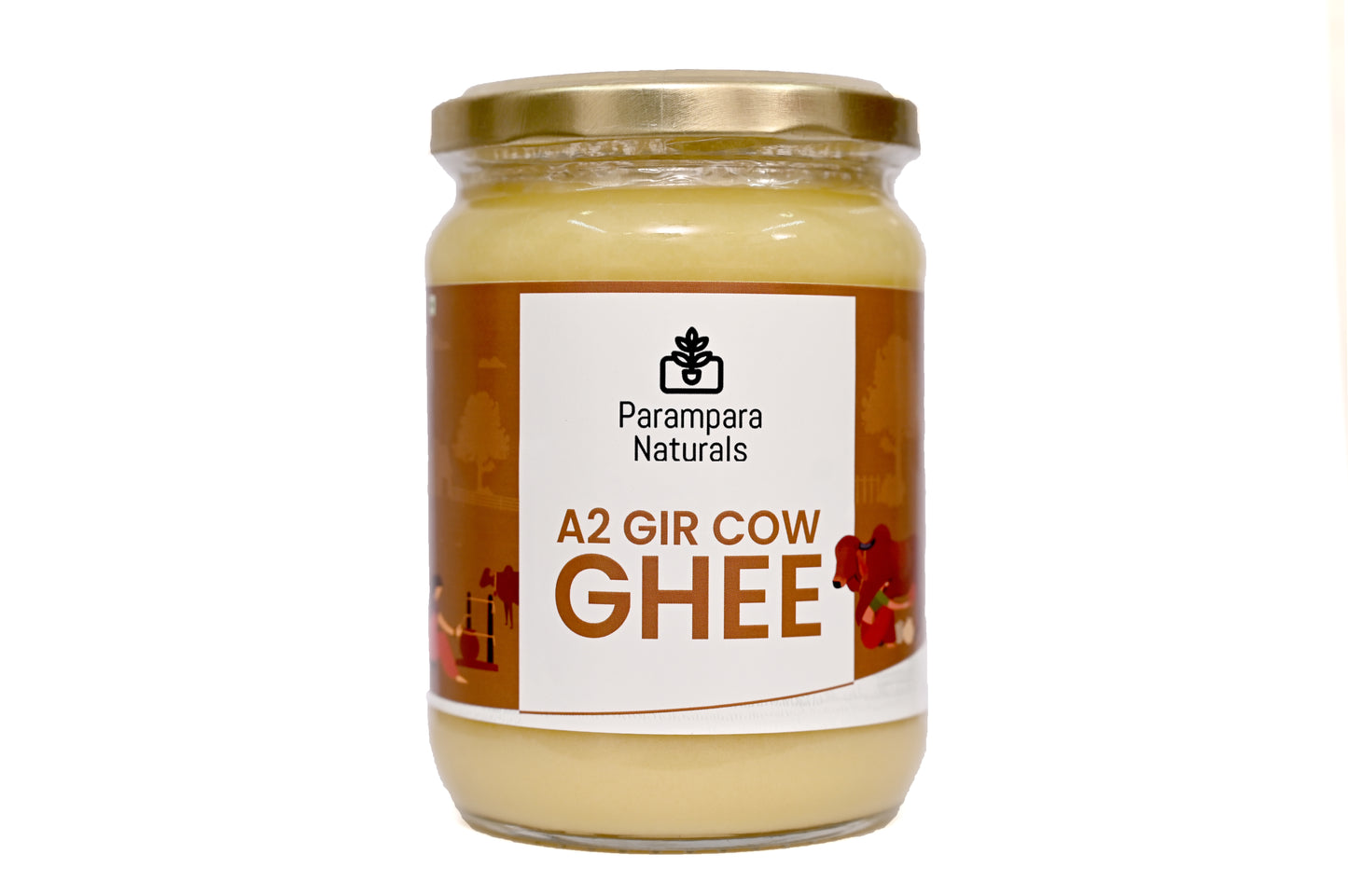
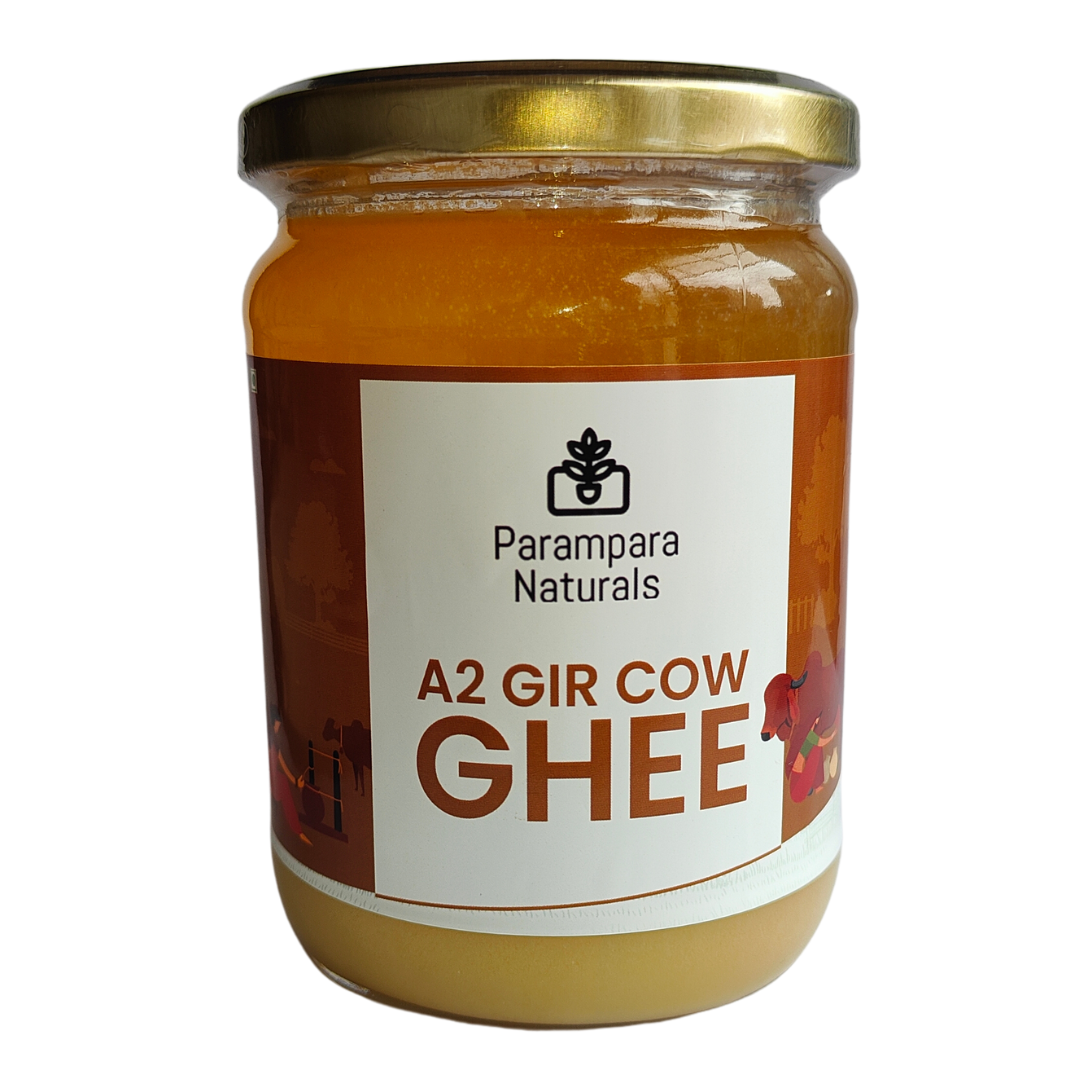
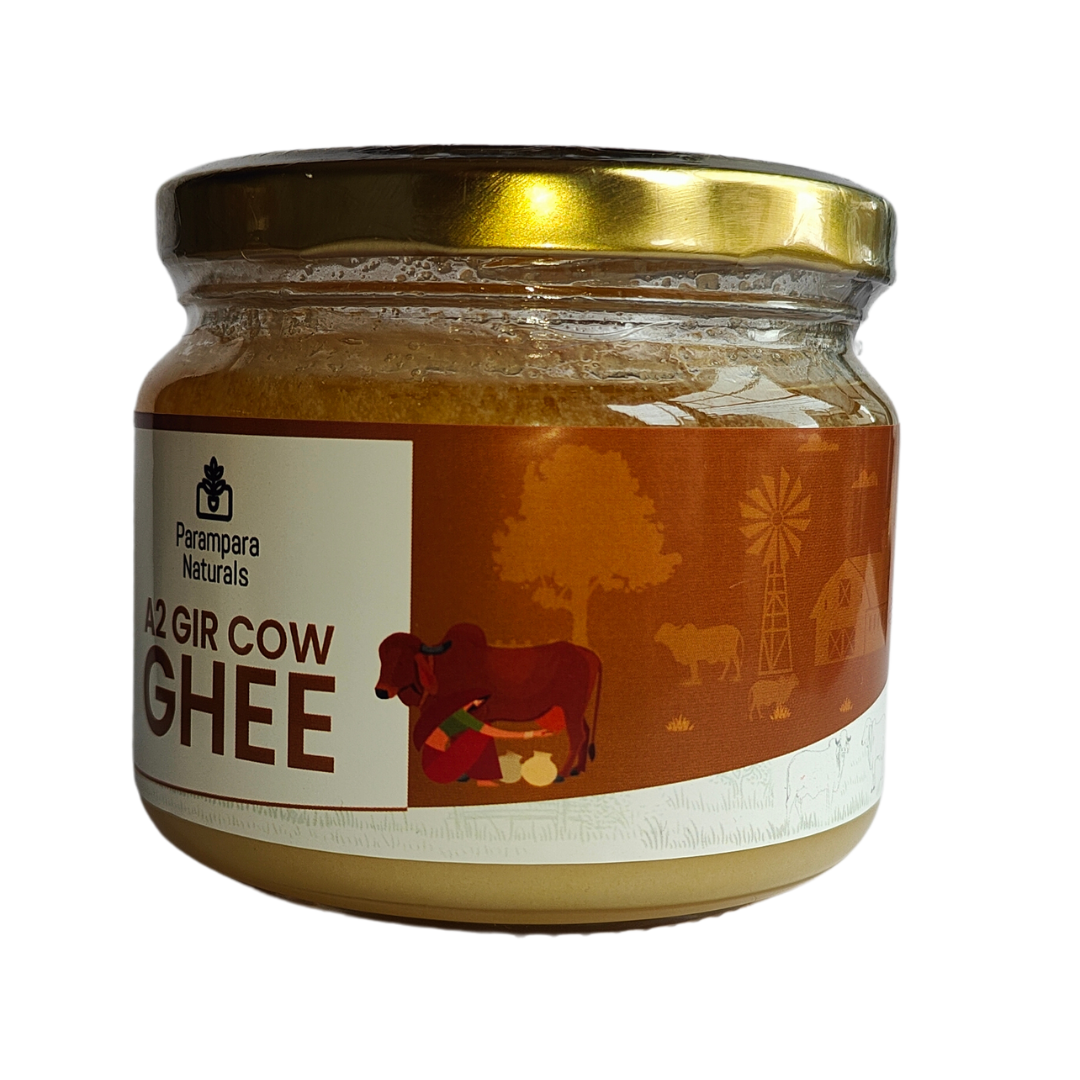
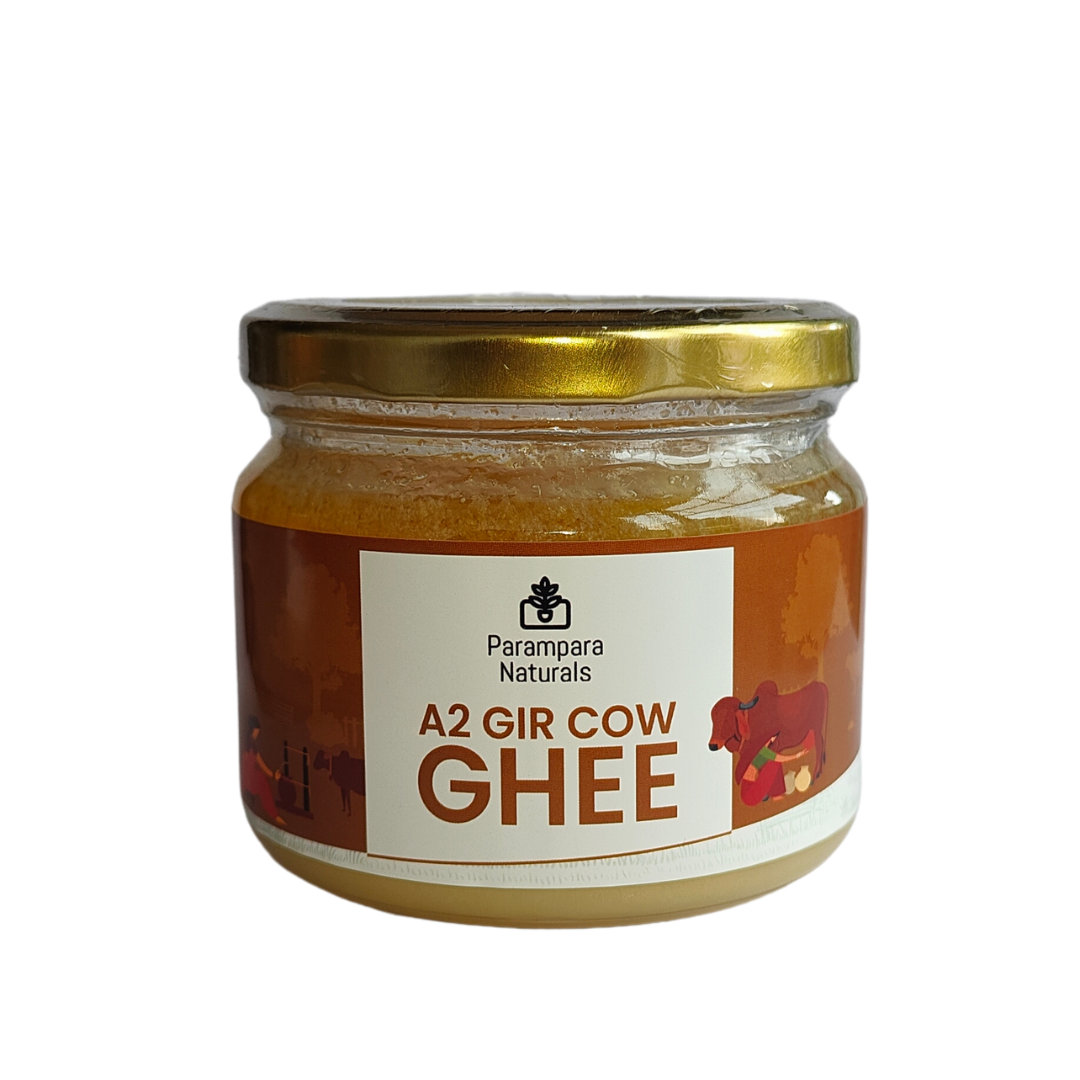
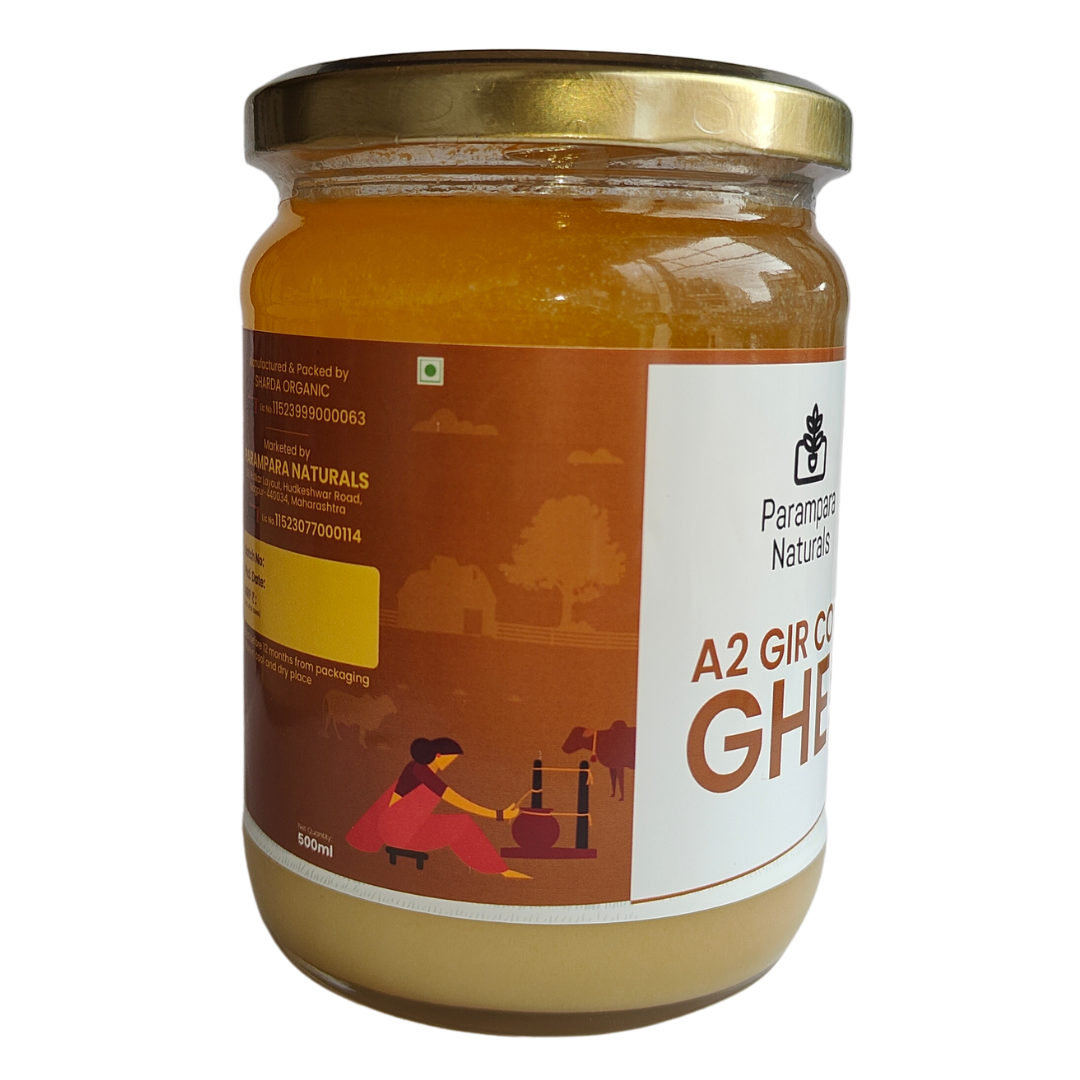
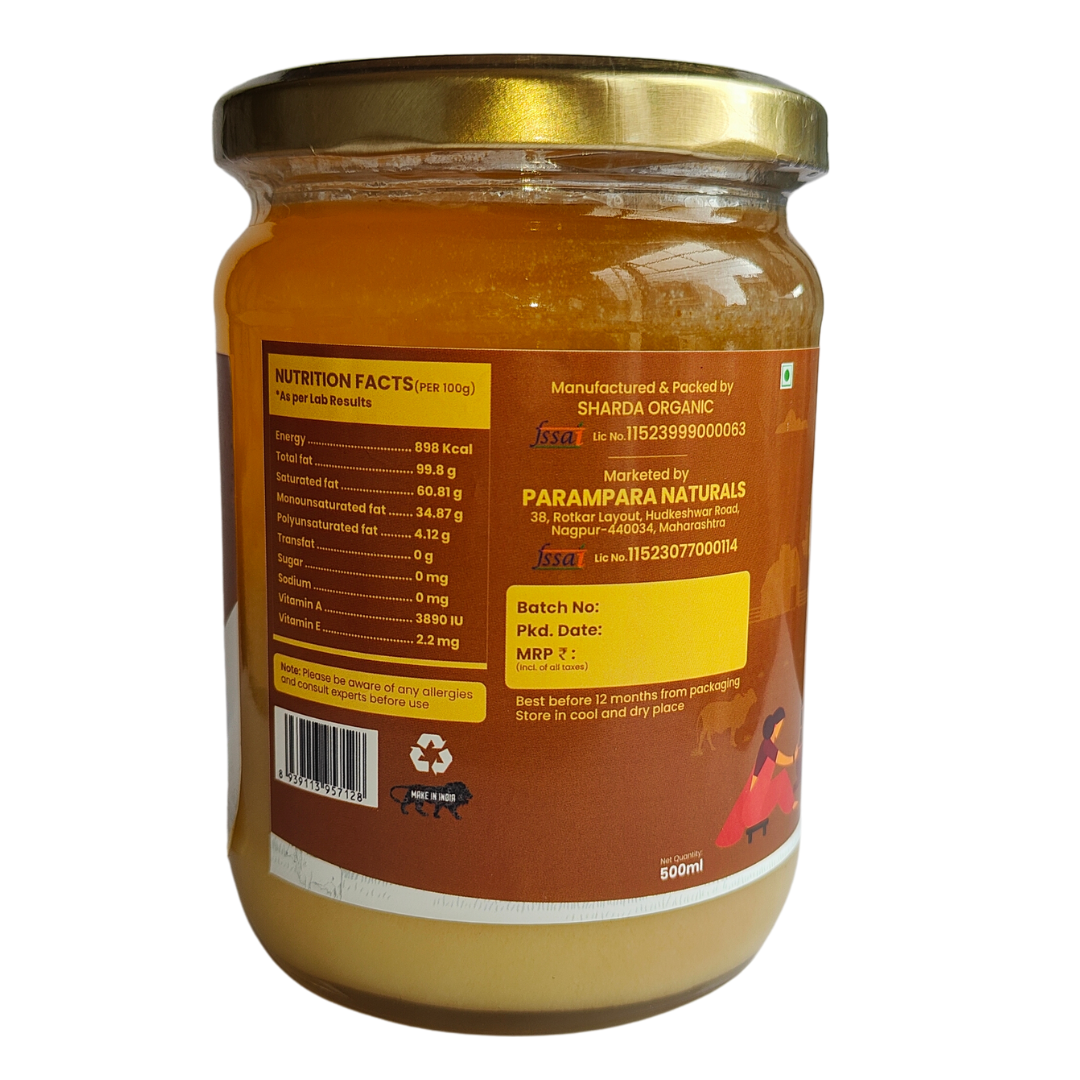
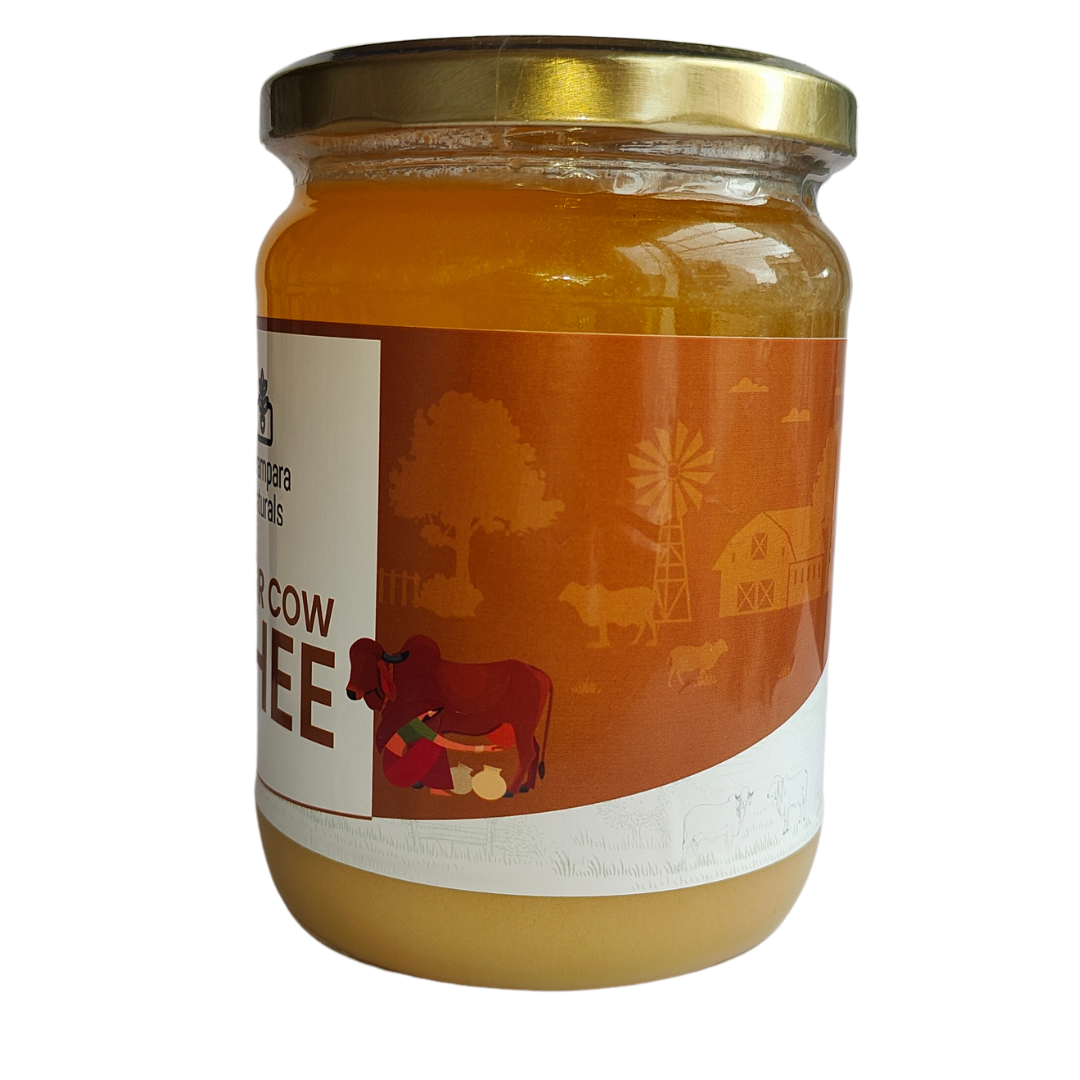
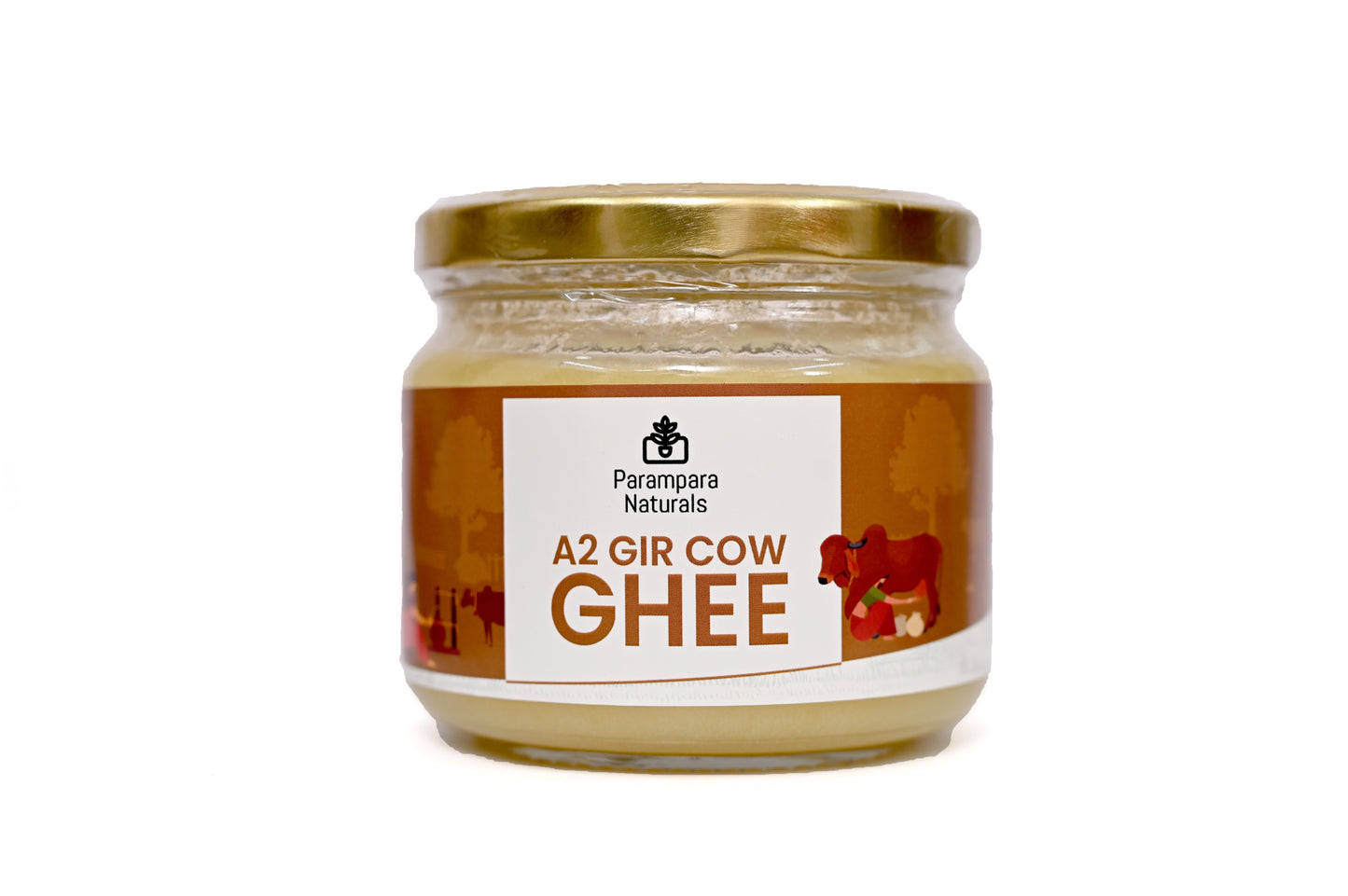
A2 Gir Cow Desi Ghee
A2 Gir Cow Desi Ghee
Couldn't load pickup availability
A2 Gir Cow Desi Ghee — Traditional Bilona Method
Our ghee is made the traditional bilona way — curd churned by hand (or slow traditional churn) into butter, then simmered slowly into ghee — from the milk of Gir cows, an indigenous Indian breed. This is a slower, more labour-intensive process than how most commercial ghee is made, which typically goes straight from cream to ghee via centrifugal separation, skipping the curdling and hand-churning steps entirely.
What "A2" means, factually. Gir cows, along with several other indigenous Indian cattle breeds, produce milk containing primarily the A2 form of beta-casein protein, as opposed to the A1 form more common in many crossbred and foreign cattle breeds used in large-scale dairy. This is a genuine, verifiable difference in the milk's protein composition. What it does *not* mean is a confirmed health advantage — the science on whether A2 milk/ghee offers measurable health benefits over A1 is still actively debated among researchers, and we're not going to claim otherwise. We sell this ghee because of its breed, its traditional process, and its taste and texture — not because we're promising you a health outcome we can't substantiate.
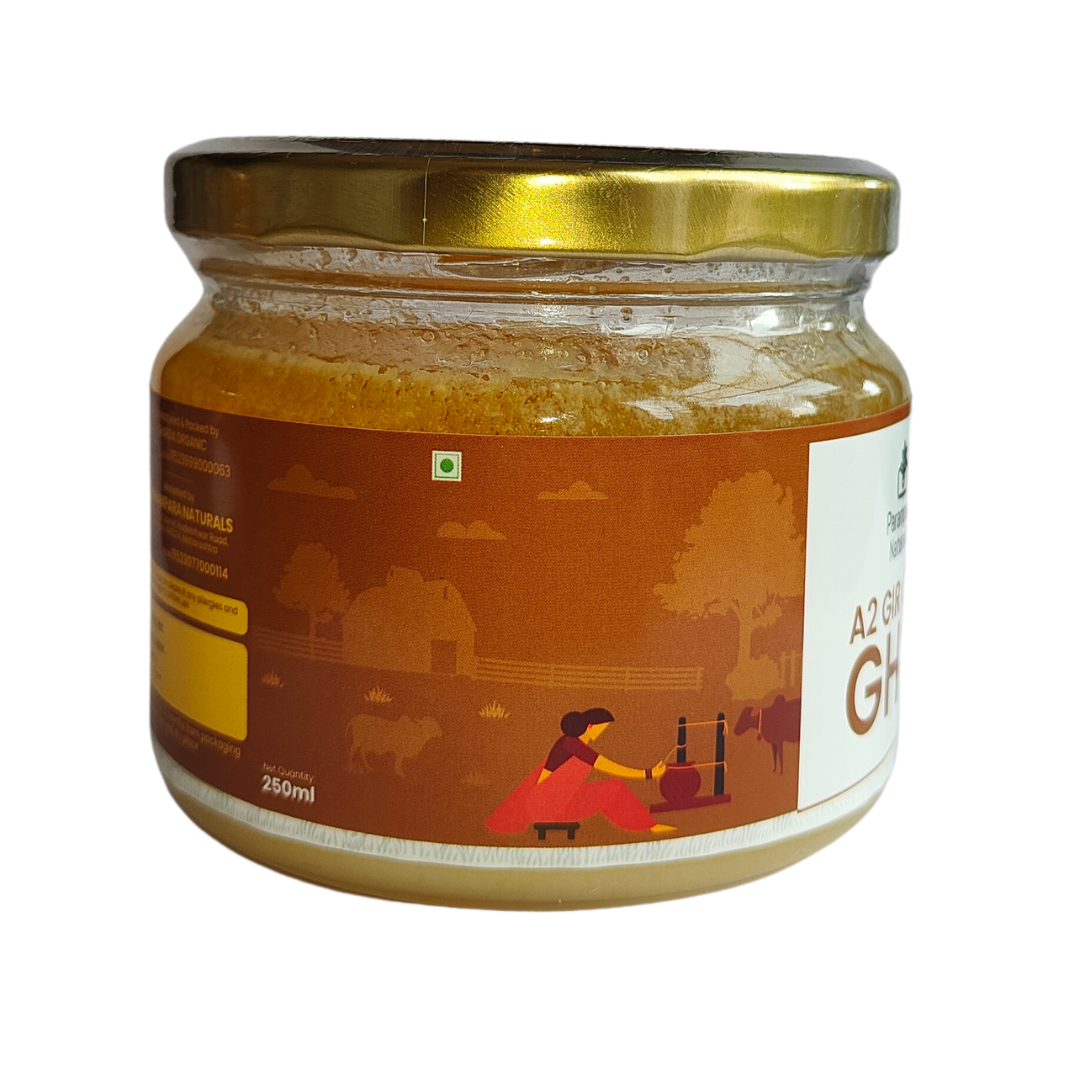
How it's made. Milk is set into curd, then hand-churned (the "bilona" method) to separate butter from buttermilk — a slower process than mechanical cream separation, and one that traditionally produces a ghee with a more granular texture and a fuller, richer aroma once the butter is slow-simmered down. The buttermilk left over is a traditional byproduct, not waste. This method takes considerably longer than industrial ghee production, which is part of why bilona ghee costs more than mass-market ghee — you're paying for the process and the time, not a marketing label.
How to use it
| Use | Notes |
|---|---|
| Tempering (tadka) for dal, sabzi | Traditional finishing touch — a spoonful at the end lifts the dish |
| Roti, paratha | Classic use — brushed on hot, straight off the tawa |
| Baking & sweets | Traditional fat for Indian mithai and festival cooking |
| Cooking at high heat | Ghee has a high smoke point, well suited to Indian-style frying and roasting |
| Raw, off a spoon | Some take a small daily spoonful as part of a traditional routine |
Storing it right
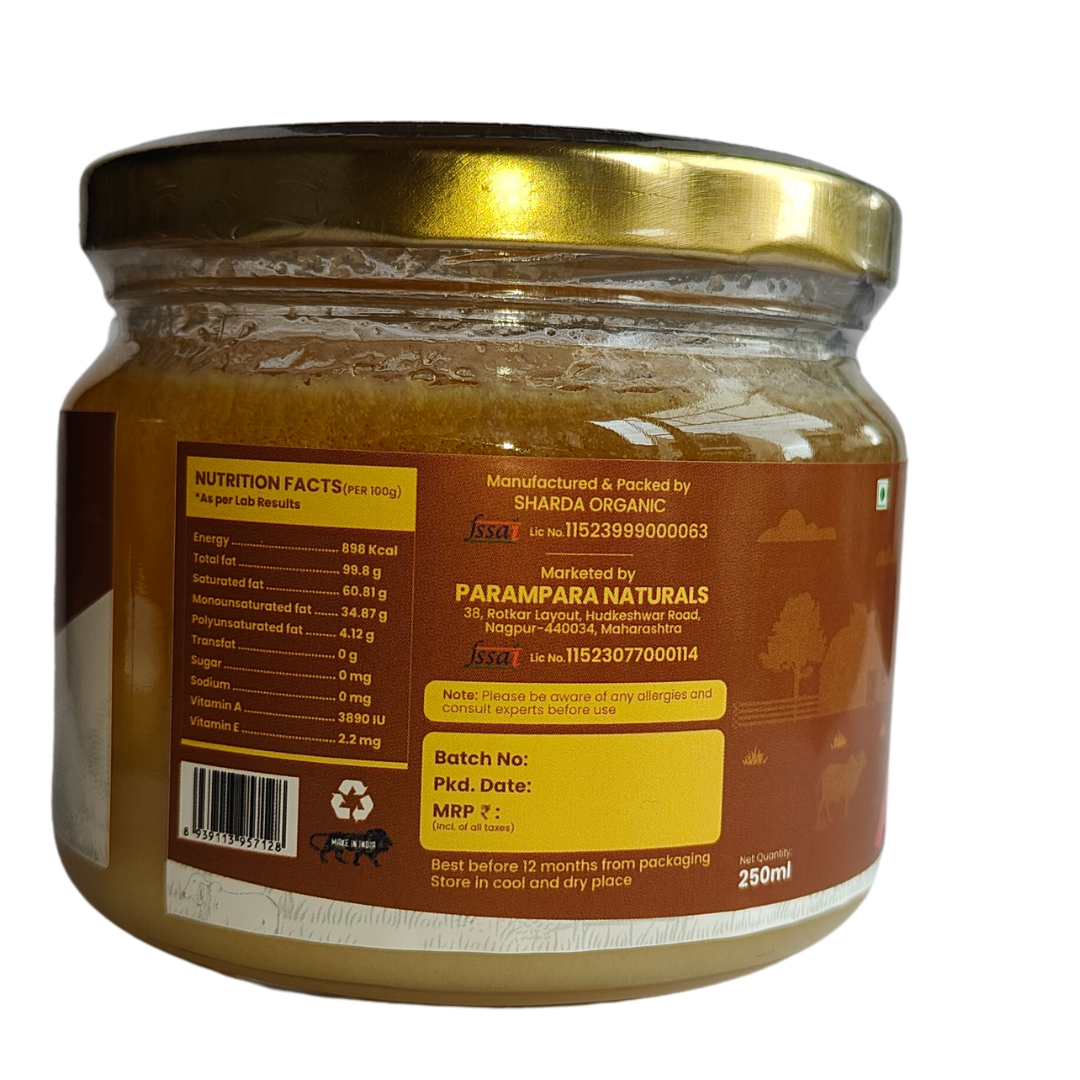
Ghee is naturally shelf-stable and does not require refrigeration — store it in a cool, dry place away from direct sunlight, with the lid tightly closed and a clean, dry spoon used each time (moisture is what shortens ghee's shelf life, not warmth). Stored this way, ghee typically stays good for several months at room temperature; refrigeration can extend this further and is fine if you prefer it, though it will cause the ghee to firm up more than usual.
Frequently asked questions
What does "A2" actually mean, and is it healthier than regular ghee?
A2 refers to the type of beta-casein protein present in milk from certain cattle breeds, including Gir cows — it's a genuine compositional difference. Whether A2 ghee offers a measurable health advantage over A1 ghee is still debated in nutrition research, and we don't make specific health claims either way. We sell it for its breed authenticity, traditional bilona process, and taste.
What's the difference between bilona ghee and regular ghee?
Bilona ghee is made by first setting milk into curd, then hand-churning it into butter before slow-simmering into ghee — a traditional, slower process. Most commercial ghee skips curdling and churns cream directly, which is faster but produces a different texture and flavour profile.
Does ghee need to be refrigerated?
No — properly made ghee is shelf-stable at room temperature for several months if kept dry, sealed, and away from direct sunlight. Refrigeration is optional and mainly a matter of preference; it will make the ghee firmer.
Is this ghee suitable for people who are lactose intolerant?
Ghee is largely free of lactose and milk proteins since they're removed during the clarification process, which is why many people who are sensitive to dairy tolerate ghee better than milk or butter. That said, tolerance varies by individual — if you have a diagnosed dairy allergy or intolerance, please check with your doctor before introducing ghee.
Why does the texture look grainy rather than smooth?
A slightly granular texture is characteristic of traditional bilona-method ghee, especially when refrigerated or in cooler weather — it's a sign of the traditional slow process, not a defect. It softens and can turn smoother at warmer room temperatures.
How much ghee is recommended per day?
There's no universal number — it depends on your overall diet and health goals. Many traditional routines include a small spoonful daily, but we'd recommend checking with a doctor or nutritionist for guidance specific to your needs, rather than relying on a general product recommendation.
Ready to switch to real cold-pressed oil?
Shop Groundnut Oil → | Shop Sesame Oil → | See Family Combo Packs →
Prefer to talk first? WhatsApp us →
Share
Bachpan ki yaad taaza ho gayi, ma ke haath ka swad. Bahut meetha laga!
Kaju katli ya laddu, sab yummy banta hai ghee ke saath.
Ghar ka halwa ab asli taste le raha hai.
Pure desi ghee ki pehchaan Parampara ne dikhayi. Must try for all!
Dadi ke haath ki yaad aa gayi, same taste!