


Parampara Naturals
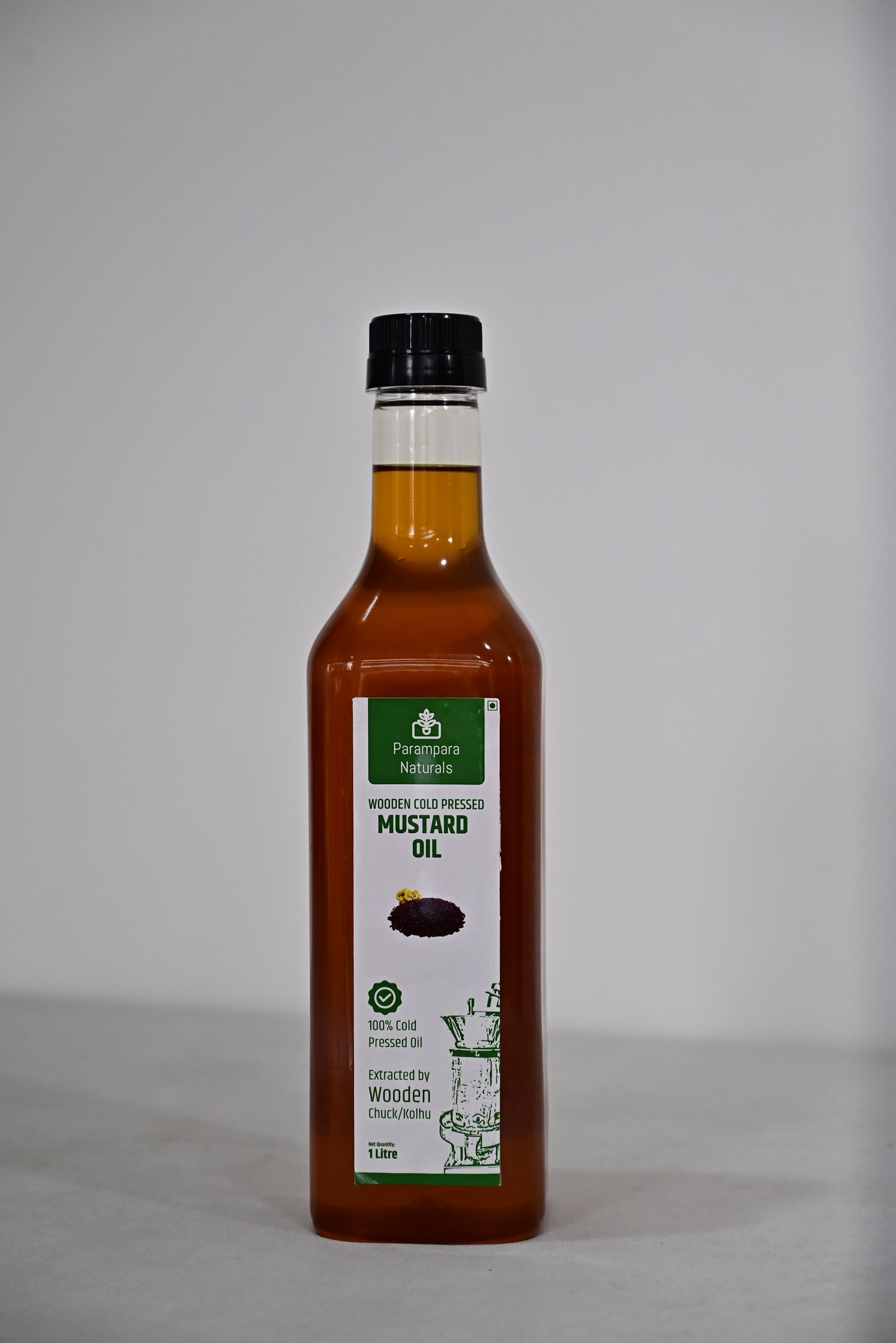
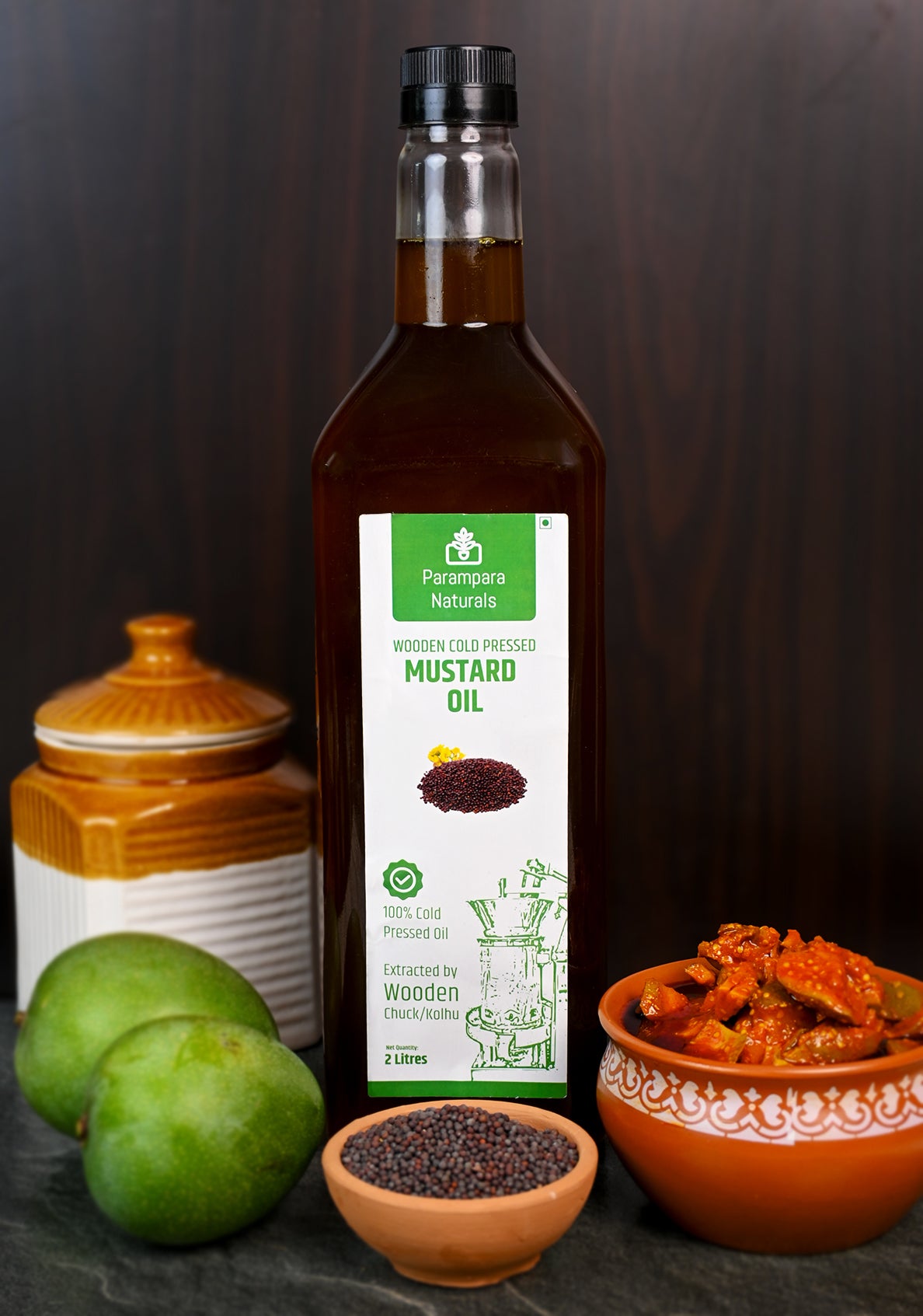
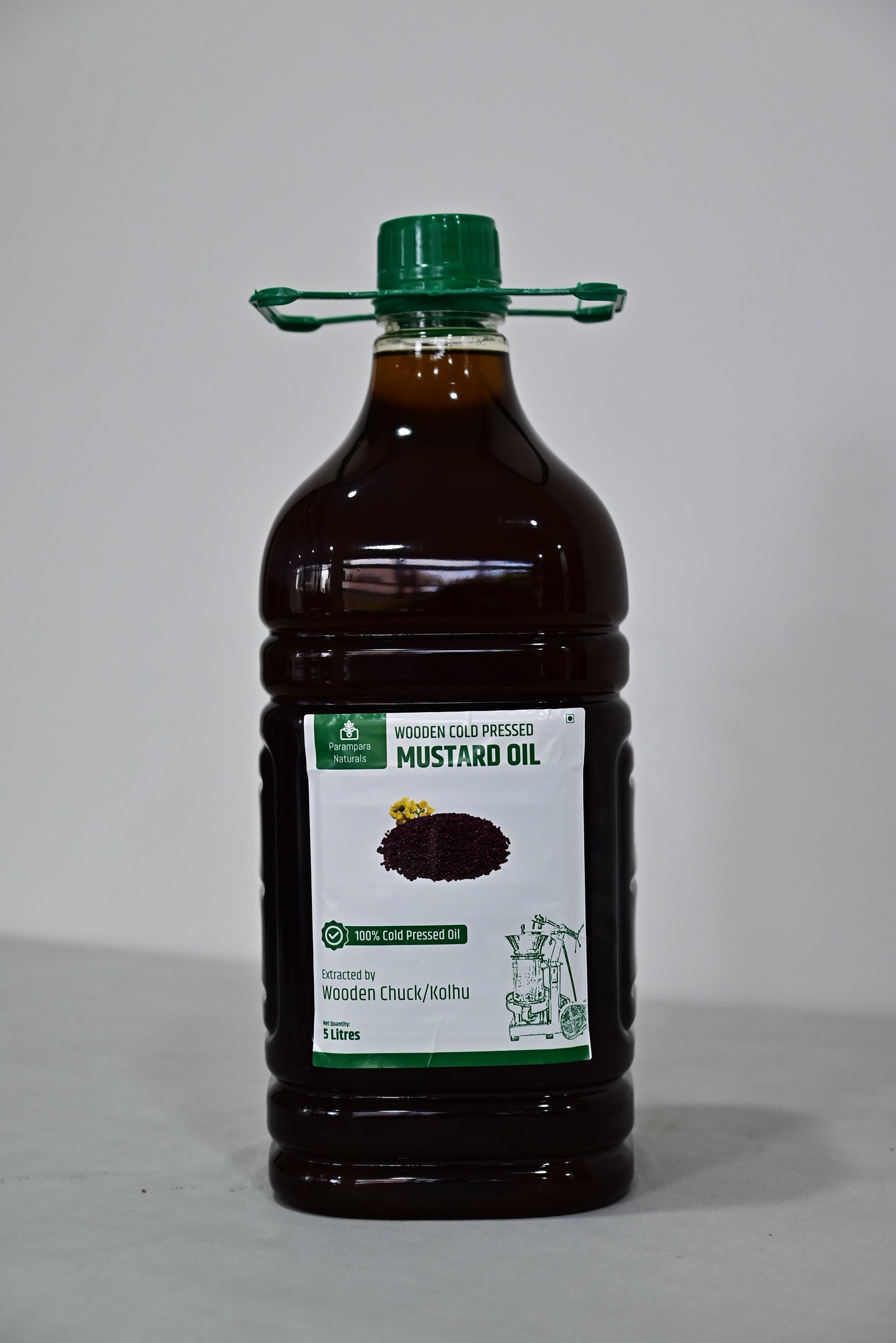
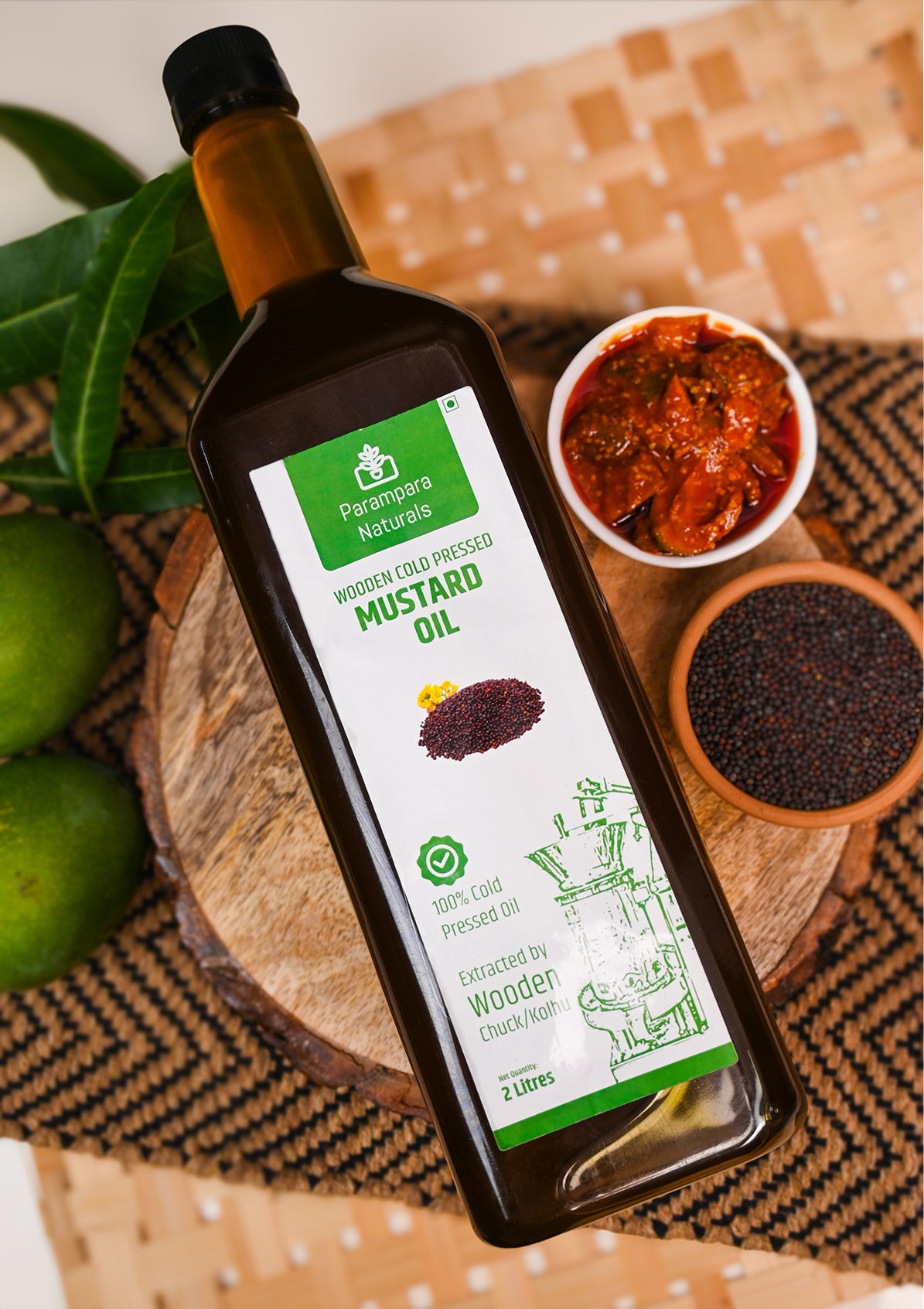
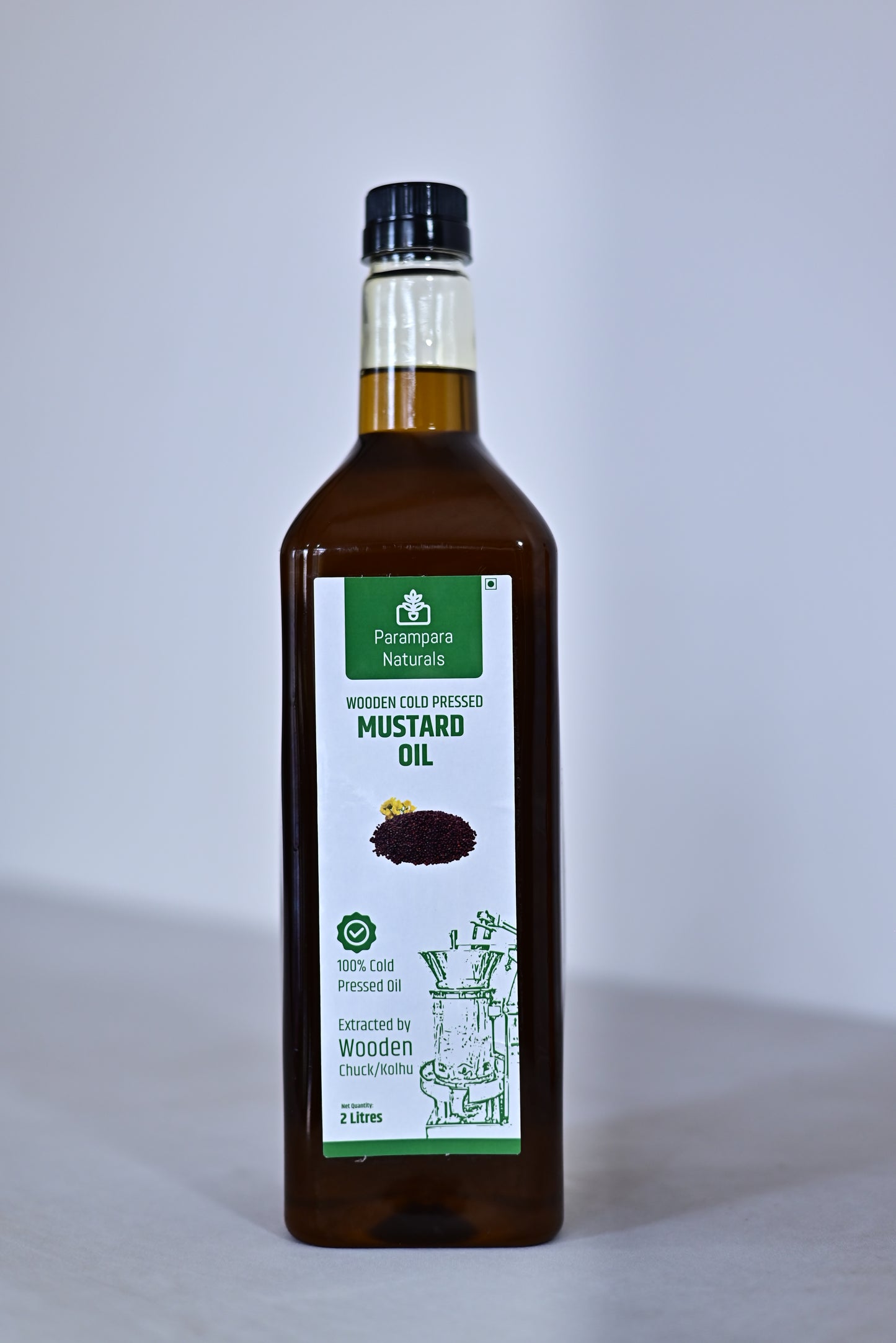
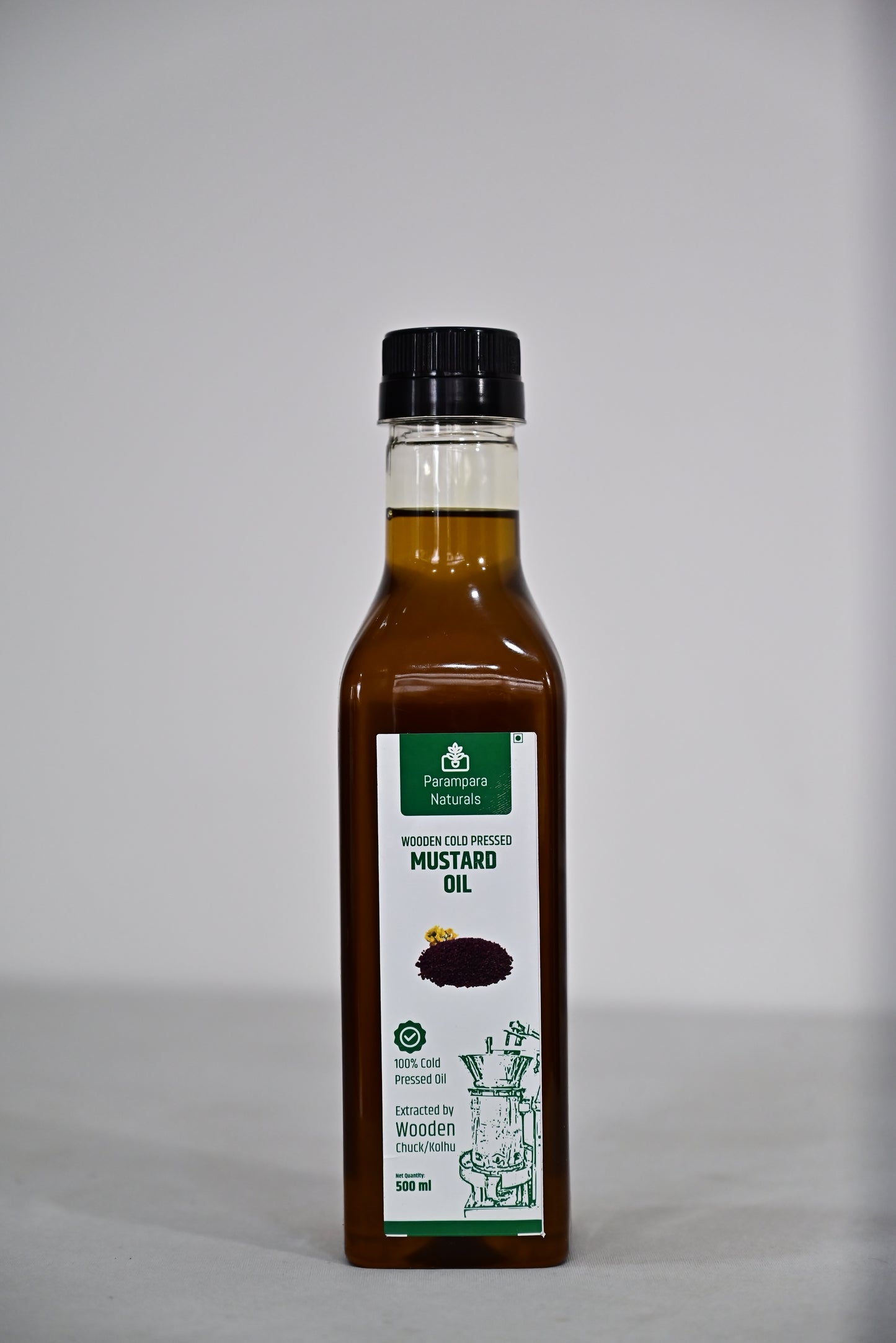
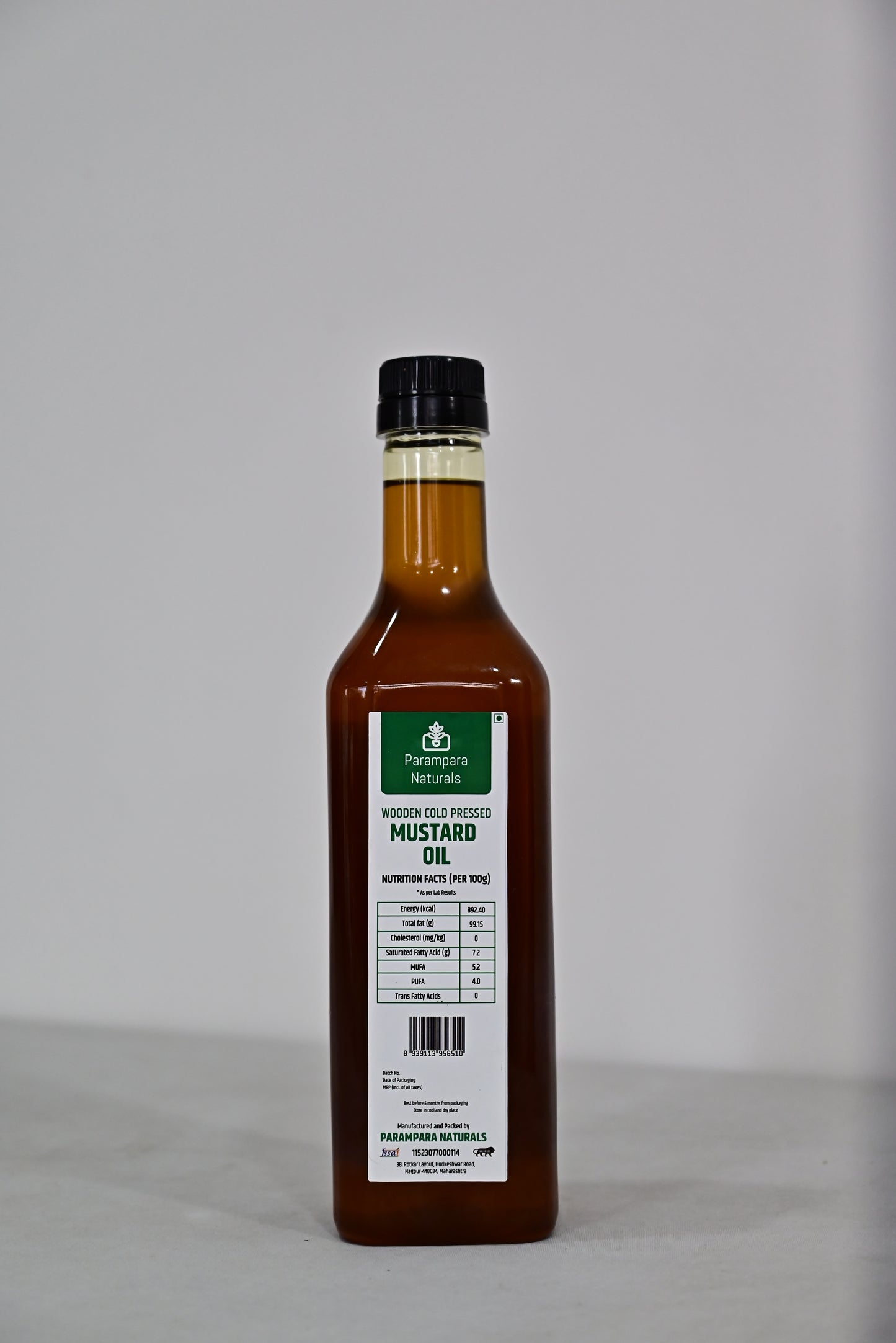
Cold Pressed Mustard Oil
Cold Pressed Mustard Oil
Couldn't load pickup availability
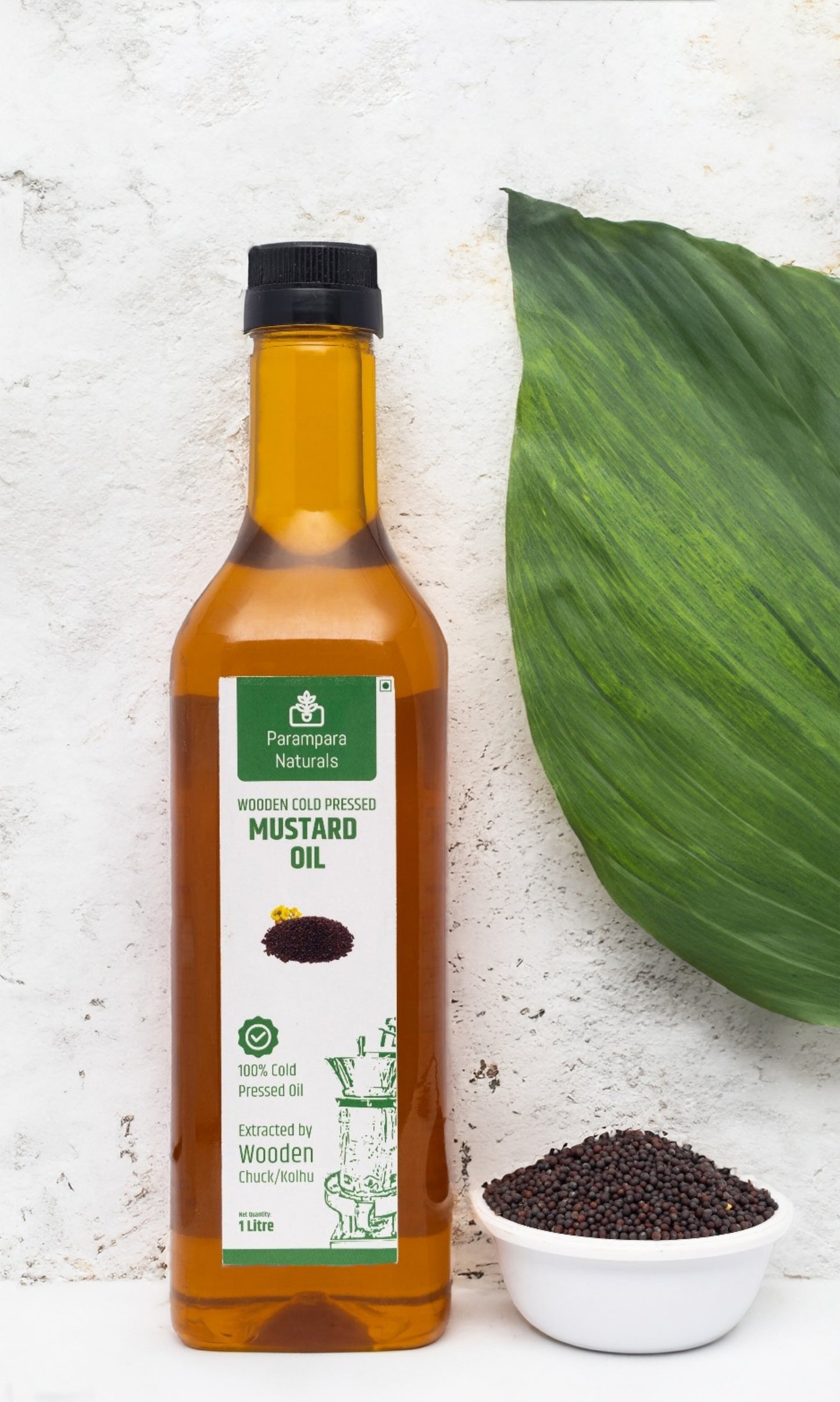
Cold Pressed Mustard Oil (Kachi Ghani) — Pungent, Unrefined, Pressed in Nagpur
If you grew up on mustard oil that actually smelled and tasted like mustard, this is that oil. Kachi ghani mustard oil is wood pressed at low temperature, without the refining that mellows most branded mustard oil into something milder and less distinctive. What you get is the sharp, pungent aroma and the slight tingle at the back of the throat when you smell it hot — the signature of real kachi ghani oil, not a flaw.
How we press it. Mustard seeds are cleaned and crushed in a wooden ghani, a slow mechanical press that extracts the oil through pressure rather than heat or chemical solvents. The "kachi" in kachi ghani literally means raw or unprocessed — the seed goes in, oil comes out, and it's filtered and bottled from there. No hexane extraction, no bleaching, no deodorising to soften the pungency that's naturally part of the oil.
Why the pungency matters. That sharp smell comes from allyl isothiocyanate, a naturally occurring compound released when mustard seed is crushed — it's also largely responsible for mustard oil's traditional role in pickling (as a natural preservative) and in tempering, where a brief high-heat smoking step ("dhuandaar") is used specifically to mellow the pungency before other ingredients go in. Refined mustard oil skips all of this by processing the pungency out at the factory — which is convenient, but it's also why it tastes noticeably flatter than kachi ghani oil.
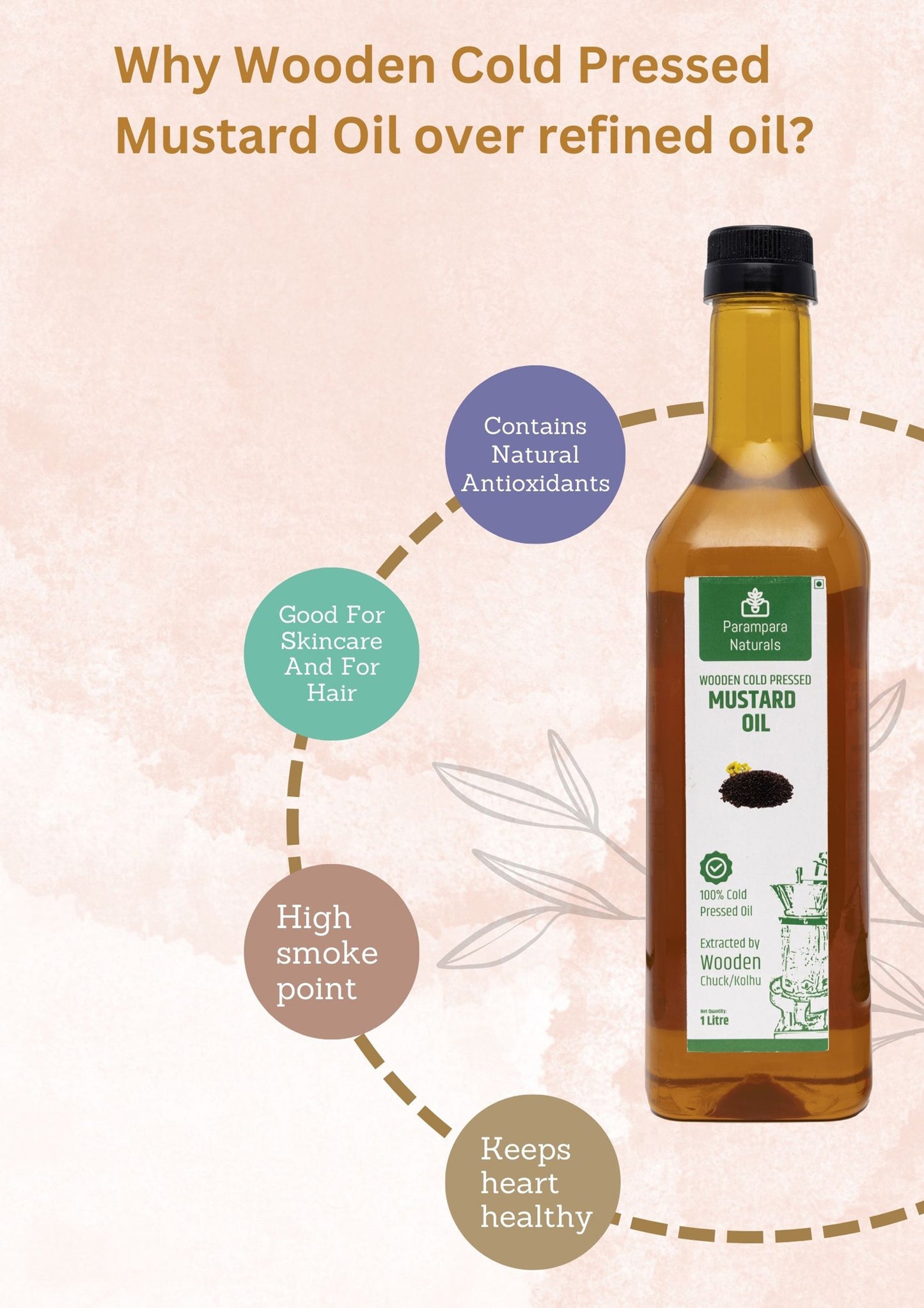
Mustard oil also has one of the higher smoke points among cold-pressed oils, and a fatty acid profile that leans toward monounsaturated fat, similar in broad terms to oils considered heart-healthier — though we'd rather you get dietary specifics from a doctor or nutritionist than a product description.
How to use it
| Use | Notes |
|---|---|
| Tempering (tadka), especially Bengali & North Indian dishes | Heat until it just starts to shimmer/smoke lightly, then add spices — this mellows the pungency |
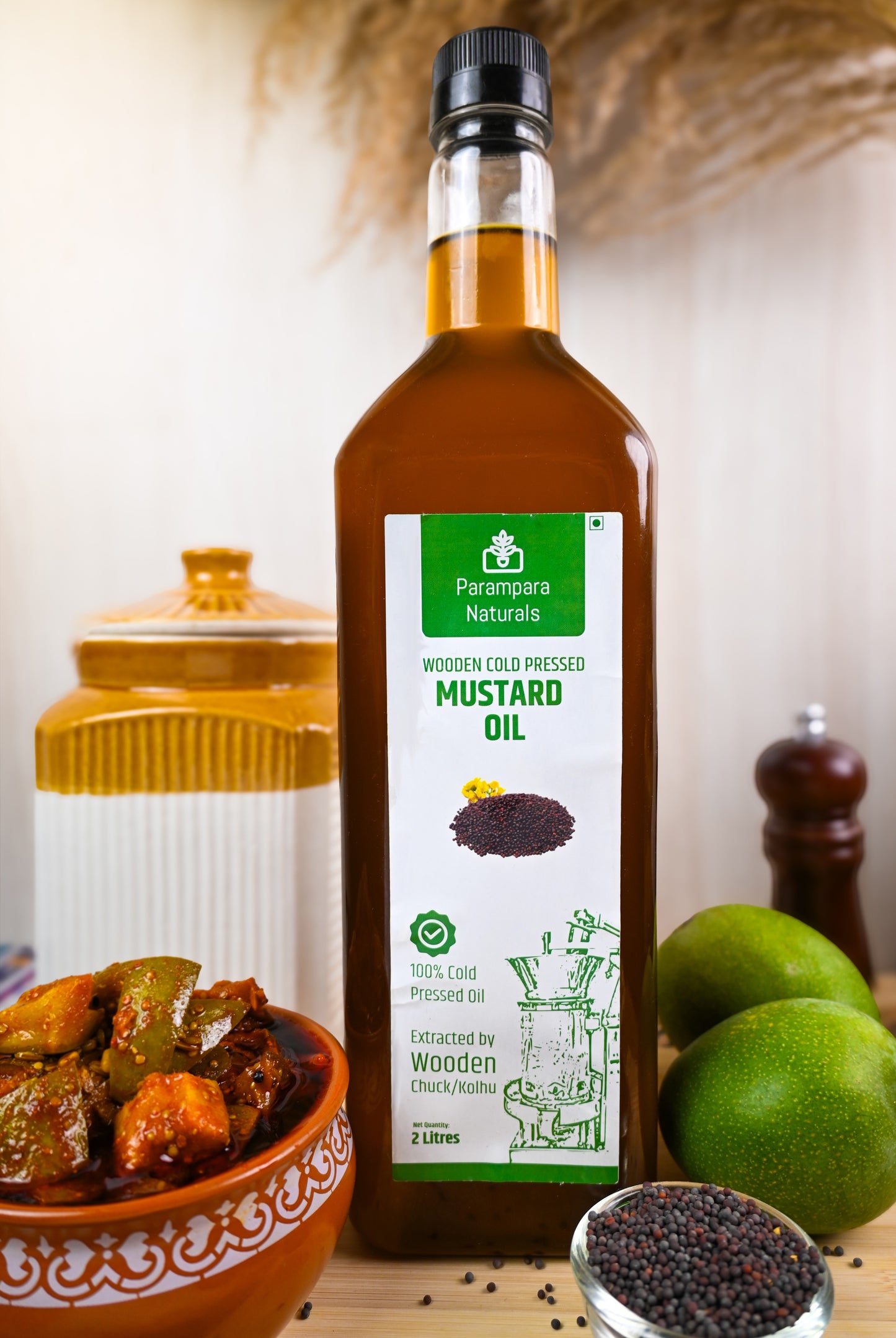
| Pickling (achaar) | Traditional preservative use — kachi ghani's raw pungency is exactly what pickle recipes call for |
| Fish curries | Classic pairing in Bengali and Odia cooking |
| Deep frying | Works well; heat first to reduce raw pungency if a milder fried flavour is wanted |
| Raw/cold use | Less common — most kitchens heat mustard oil first to mellow it |
Storing it right
Store in a cool, dark place away from the stove and direct sunlight — a kitchen cabinet works well. The bottle should stay tightly capped between uses. Cold-pressed mustard oil doesn't need refrigeration; in cold weather it may turn slightly cloudy or thicken, which is just natural waxes solidifying and reverses at room temperature. For best pungency and flavour, use within 4–6 months of opening.
Frequently asked questions
Why does this mustard oil smell so much stronger than the one I usually buy?
Because it's unrefined kachi ghani oil — the pungent smell comes from compounds naturally present in mustard seed that refining processes out. Heating the oil briefly before cooking (the traditional "dhuandaar" step) mellows the sharpness if you find it too strong raw.
Is kachi ghani mustard oil safe to cook with directly, or does it need to be heated first?
It's safe either way. Many traditional recipes call for briefly heating it to smoking point and letting it cool slightly before adding other ingredients — this is done for flavour (mellowing the pungency), not for safety.
What's the difference between kachi ghani and regular mustard oil?
Kachi ghani means the oil is wood pressed and unrefined — the raw, pungent oil as it comes off the seed. "Regular" mustard oil sold in most supermarkets is typically refined, which softens the smell and taste for a more neutral, consistent product.
Can I use this oil for pickling?
Yes — kachi ghani mustard oil is the traditional choice for Indian pickles specifically because of its pungency and natural preservative properties.
Does mustard oil go rancid faster than other oils?
Not particularly, if stored properly — cool, dark, tightly capped. Like any cold-pressed oil, it lacks the shelf-stabilising effect of heavy refining, so we recommend using it within 4–6 months of opening rather than treating it as indefinitely shelf-stable.
Is this oil suitable for oil pulling or topical use?
Mustard oil is used topically in some traditional practices, but its strong pungency makes it a less common choice for that than milder oils like sesame or coconut. If you're looking for an oil for skin or oil-pulling use, our sesame or coconut oil may suit better.
Ready to switch to real cold-pressed oil?
Shop Groundnut Oil → | Shop Sesame Oil → | See Family Combo Packs →
Prefer to talk first? WhatsApp us →
Share
Mustard oil strong nahi hai, just perfect for my pickles. Great!
Mustard oil rubbing in winters se behtar kuch nahi, dadi ki yaad aa gayi.
Paratha aur achaar sirf isi tel mein banta hai, asli taste.
Parathas taste authentic. My father who's 85 yrs old says, “bilkul desi swad!” Babuji khush to ham bhi
Paranthe banaayi mustard oil mein, mummy ki yaad aa gayi!